New insights into greenhouse gases from forested peatlands
Researchers are investigating nitrous oxide emissions from forested peat soils to better understand their climate impact. The PeatFor project, based in Ireland, combines fieldwork and advanced analysis to inform sustainable peatland forest management and policy.
Source:
Teagasc Agricultural News
•
⏱️ 2 min read
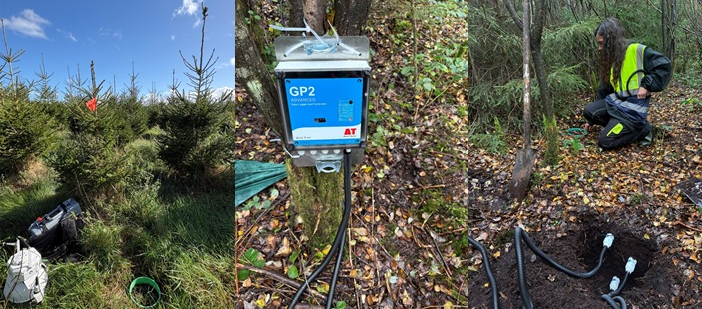
Understanding the climate effects of forests requires examining not only the carbon stored in trees but also the exchange of greenhouse gases between soils and the atmosphere. Nitrous oxide (N₂O), a powerful greenhouse gas linked to microbial nitrogen cycling, is a critical focus of this research.
The PeatFor project, led by the University of Limerick and supported by Teagasc and Trinity College Dublin, explores carbon and nitrogen fluxes in forested peatlands across Ireland. It assesses how variables such as peat type, drainage, and tree species influence these dynamics through a combination of field measurements, remote sensing, and modelling. This effort aims to guide future land-use policies by providing a comprehensive understanding of forest-climate interactions.
Currently, an extensive field-monitoring network operates at three sites: Colgagh (Co. Offaly), Christianstown (Co. Kildare), and Cappaghoosh (Co. Galway). These locations feature multiple gas-sampling collars to measure N₂O emissions weekly, alongside environmental monitoring of soil moisture, temperature, and water-table depth. The research emphasises the role of water-table fluctuations in regulating oxygen availability in soils, which affects the microbial processes producing or consuming N₂O. Upcoming phases include stable-isotope analyses beginning in November 2026 to distinguish between nitrification and denitrification pathways. Ultimately, these insights will enhance models predicting greenhouse gas fluxes, supporting improved management of peatland forests for climate mitigation and biodiversity conservation.
0 views