Irish beef gains global edge through Teagasc innovation
Teagasc’s latest research is transforming how Irish beef achieves premium quality standards. The work focuses on tenderness, flavour consistency and sustainable farming practices to secure higher market value. Findings were published in the latest Today’s Farm magazine.
Source:
Teagasc Agricultural News
•
⏱️ 2 min read
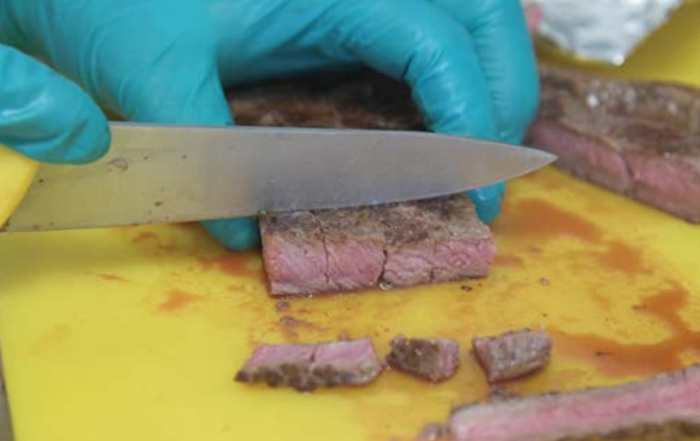
A recent study by Teagasc scientists is reshaping how Irish beef secures top-tier prices in global markets. Through detailed research led by Mary Ann Kent of Meat Science Technologies, the team is establishing measurable standards for tenderness and flavour—key drivers of consumer satisfaction and farm profitability. The goal is to ensure every cut meets premium expectations, benefiting both producers and buyers alike.
JingJing Liu, a researcher at Teagasc Ashtown Food Research Centre, emphasised the challenge of consistency in beef quality. "The measures of quality are tenderness and flavour," Liu explained. "If we want to command the highest prices, we must guarantee that every piece of meat delivers on these fronts." The research team is now developing an eating quality prediction system tailored to European production systems, drawing on extensive datasets to link animal genetics, farming practices and processing methods to final product quality.
Breed and production methods play a pivotal role in beef quality. Heifers, for example, often yield meat perceived as more tender and flavourful due to higher intramuscular fat levels. Breeds like Angus and Wagyu naturally exhibit superior marbling, which enhances juiciness and palatability. Meanwhile, Teagasc researchers are exploring production adjustments—such as earlier slaughter ages and dry aging—to further refine quality. Dry aging, a process where beef is stored under controlled conditions for up to 35 days, intensifies flavour and tenderises the meat by concentrating proteins and fats while breaking down muscle fibres.
The technique, however, comes with trade-offs. Dry aging reduces saleable yield and forms a crust, necessitating precise control over factors like muscle shape and size. Smaller cuts lose moisture faster, impacting both quality and cost. High-pressure processing has shown promise in accelerating the dry aging process, but researchers caution that excessive pressure can compromise tenderness, colour and lipid stability. Innovative technologies like UV treatment and AI-driven digital tools are also being tested to optimise outcomes. Ruth Hamill, a senior Teagasc researcher, highlighted the potential of artificial intelligence and computer vision to enhance consistency, reduce waste and improve sustainability across the meat processing chain.
The ultimate aim is clear: deliver premium-quality Irish beef that commands higher prices while minimising environmental impact. While an eating quality prediction system remains under development, the research already provides actionable insights to help farmers and processors maximise value. For further details, the findings are available in the latest edition of *Today’s Farm*.
0 views