Cover crop deadlines and guidelines for Irish farmers
Farmers involved in national cover crop schemes must adhere to specific sowing deadlines and seed standards. Expert advice from Teagasc Crops Specialist Ciaran Collins highlights key requirements impacting soil health and crop rotation across Ireland.
Source:
Teagasc Agricultural News
•
⏱️ 2 min read
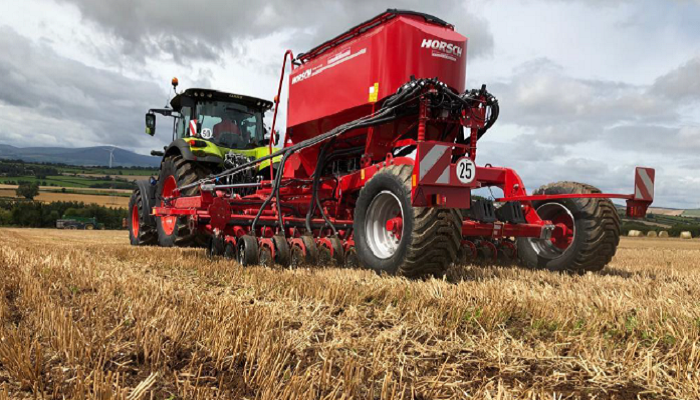
Despite many farms completing their harvest early this year, the establishment of cover crops has progressed slowly due to exceptionally dry soil conditions in several regions. Ciaran Collins, a Crops Specialist at Teagasc, emphasises that growers involved in cover crop initiatives must be mindful of varying sowing deadlines depending on the scheme they participate in.
Under the Farming for Water EIP – Measure 6A (Other Cropping Systems), cover crops had to be sown by 1 September, an earlier deadline than the 15 September cutoff for ACRES participants. Those who enrolled in the Farming for Water EIP last year are permitted to sow the same area again, with declarations due by 1 October. Payments are calculated based on the actual area planted, with a combined maximum of 40 hectares allowed across Measures 6A and 6B.
Growers are advised to purchase only seeds tested under the Higher Voluntary Standard (HVS) to ensure freedom from Blackgrass, Sterile Brome, and Wild Oats. Seed mixtures should contain at least two species suited to the farm’s crop rotation, meeting full sowing rates without exceeding 60% for more than one species. Fodder brassicas and oats are recommended for late planting and fodder needs, but certain brassica species should be avoided if oilseed rape is grown to prevent club root risks. Both schemes permit grazing from 1 January, and ploughing is prohibited; seeds should be drilled into stubble or broadcast with light cultivation and rolling. Maintaining seed purchase documentation for five years is essential for inspection purposes.
0 views