New insights into methane emissions from dairy farms
A comprehensive review highlights the drivers of methane emissions and explores strategies to reduce them in pasture-based dairy systems. The research, led by Teagasc scientists, is vital for Ireland’s agricultural climate commitments and greenhouse gas reduction targets.
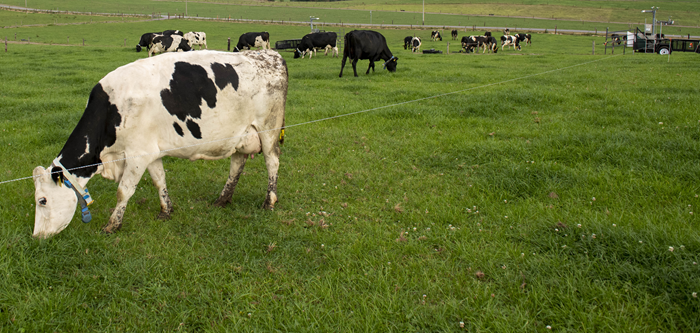
Understanding Methane Emissions in Dairy Systems
Enteric methane arises naturally when microbes in the rumen break down feed, releasing methane mainly through belching. Measuring methane on farms at scale remains difficult, so models estimate emissions using standardised conversion factors linked to feed intake energy. Recent advances in measurement technologies and studies by Teagasc, Wageningen University, and Dairy NZ indicate that actual methane emissions from grazing dairy cows may be lower than previously estimated.
Mitigation options
Several approaches are being investigated to reduce methane output:
- Feed additives like Asparagopsis spp and 3-NOP can reduce methane by 20-40% in housed systems but show lower effectiveness in grazing due to dosing challenges.
- Vaccines targeting methanogens are under development but require further proof of effectiveness in real-world conditions.
- Genetic selection offers promising long-term reductions, with cows bred for high production not necessarily increasing methane output, potentially cutting emissions per milk unit by 0.5-1% annually.
- Grazing management plays a crucial role; high-quality spring grass leads to significantly lower emissions than summer or autumn forage. Early turnout and reduced silage feeding in spring also help.
- Maintaining digestible swards at about 1,400 kg DM/ha pre-grazing optimises methane reductions and lessens concentrate feed needs, lowering off-farm emissions.
- Mixed-species swards incorporating clover, plantain, and chicory show potential for reducing methane relative to milk production, though results vary.