German pig farm showcases advanced welfare practices
A recent visit to a multi-generational pig farm in Lower Saxony revealed innovative approaches to animal health and sustainability. The operation balances high welfare standards with circular farming, producing premium pork near Hamburg with a focus on gut health and environmental care.
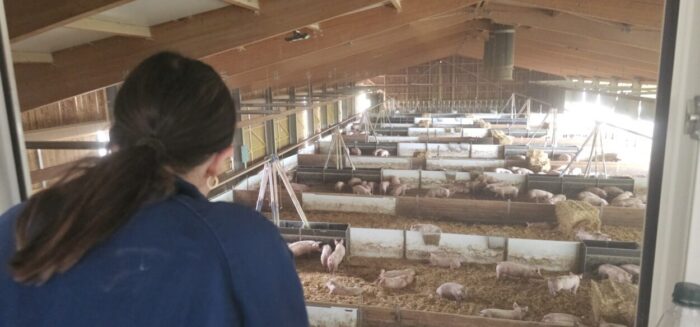
Innovative pig farming in Lower Saxony
During a recent trip to Germany for the European Association for Animal Production meeting in Hamburg, Laura Boyle, Teagasc Pig Research Officer, visited the Jan-Hendrik Hohls pig farm alongside German consultant Mirjam Lechner, who specialises in behavioural and metabolic disorders in pigs. Situated in Becklingen, Lower Saxony, about 90km from Hamburg, this award-winning demonstration farm is renowned nationally for its commitment to animal welfare.
The family-run enterprise spans three generations and integrates approximately 255 hectares of arable land with pig production and a biogas plant. Jan-Hendrik, who has a background in agricultural engineering and business economics, manages the farm with his wife Claudia, their three children, two permanent employees, an apprentice, and seasonal labourers. The farm operates a circular system, producing the majority of pig feed on-site through a computer-controlled mill, utilising GMO-free cereals such as barley, rye, wheat, and maize. Notably, the pigs’ diets focus on fibre content to support gut health, which is regarded as central to both animal wellbeing and behaviour. The farm also incorporates former foodstuffs into pig diets.
Sustainability and welfare at the core
Manure, slurry, and grassland residues fuel an on-farm biogas plant, which supplies electricity and heating, with surplus energy sold back to the grid. Photovoltaic panels further enhance energy self-sufficiency. The slurry storage capacity extends to nine months.
The farm maintains around 320 sows and between 2,000 to 2,500 finishing places, producing approximately 8,000 to 9,000 finished pigs annually. All animals are born and raised on the farm under a fully closed system. The premium brand, “Becklinger Strohschwein” (Becklinger Straw Pigs), features finisher pigs with permanent outdoor access and deep straw bedding indoors, providing 1.5 m² space per pig. One finishing building utilises the advanced “Pigport 5” design, one of few in Germany.
Weaner pigs are housed on slatted flooring with balconies used after one week to reduce stress and encourage feeding. All pigs have intact curly tails, a welfare indicator monitored daily; routine tail docking has not been practised for over four years. The weaners receive constant access to soya husks, referred to as ‘fibre food’ to promote gut balance rather than mere enrichment.
When signs of tail biting appear, clay and compost are mixed into the feed trays, stimulating geophagy – the consumption of soil or clay – which helps alleviate gut disturbances. Water quality is frequently tested, and generous bowl water provision replaces nipple drinkers, as the latter can hinder adequate intake in newly weaned pigs.
Additional welfare measures include robot-delivered fresh straw, brushes, and cooling opportunities. Continuous animal observation is emphasised as crucial to maintaining low aggression and intact tails.
Market and recognition
The premium pork is marketed regionally through Fleischerei Zimmermann, Edeka Ehlers markets, and Wurst-Basar outlets, achieving prices approximately 40% above conventional levels. Support during the farm’s conversion to higher welfare standards came from the Lower Saxony Ringelschwanzprämie and federal animal-welfare funds. The farm’s accolades include the Innovationspreis Tierwohl 2021 and first prize in the MSD Preis der Tiergesundheit 2022, which are actively promoted to customers.
This visit provided valuable insights into the commercial viability of integrating elevated welfare standards, such as intact tails, straw bedding, and outdoor access, within a conventional pig production system. The importance of space, observation, feed and water quality, fibre provision, circularity, and short supply chains was evident throughout.
In an upcoming Teagasc Daily article, Laura Boyle will explore how Jan-Hendrik achieves his notably low sow replacement rate, shedding further light on this exemplary operation.