Farmers reveal challenges in winter silage feeding
A recent survey highlights the extensive time and effort dairy farmers invest in winter feeding routines. Conducted nationwide during the 2025/26 season, the findings reveal key factors slowing the process and practical ways to enhance efficiency.
Source:
Teagasc Agricultural News
•
⏱️ 1 min read
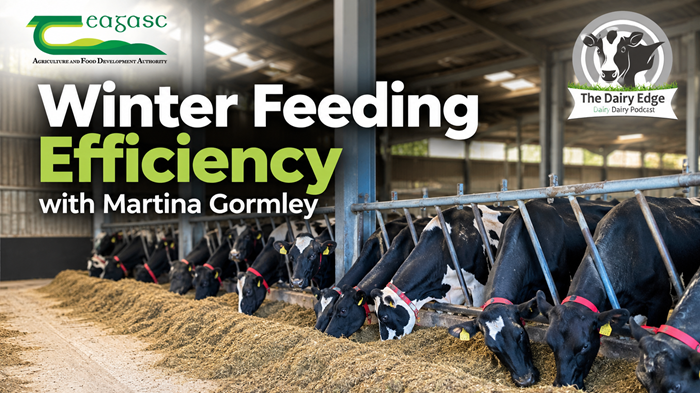
Martina Gormley, a Dairy Specialist based in Athenry, County Galway, recently joined host Stuart Childs on the Dairy Edge podcast to discuss a comprehensive survey on winter feeding practices. The research, carried out over the 2025/26 winter, engaged more than 70 dairy farmers across Ireland to better understand the time and resources devoted to feeding silage.
The survey revealed that farmers typically spend an average of 14 hours per week feeding silage, equating to approximately six minutes per livestock unit weekly. However, this varied widely between farms. Factors such as farm layout, limited feed space, use of multiple yards, and handling equipment were identified as common contributors to slower feeding times.
Around half of those surveyed reported insufficient feed space, while 40% still relied on manual tools like forks during some part of the feeding process. Martina emphasised that farmers should start by timing their own feeding routines to identify bottlenecks. Improvements can be made by enhancing feed space, employing appropriate bale-handling equipment such as grabs, bale slices, or unrollers, and positioning silage closer to the livestock to boost feeding efficiency. These adjustments are crucial considerations for future farm developments.
0 views