Optimising winter feeding to reduce dairy methane
James Dunne from Teagasc highlights effective feeding strategies to balance costs and nutrient needs for autumn-calving dairy cows during winter. This guidance aims to maintain production efficiency while managing methane emissions in Irish dairy herds.
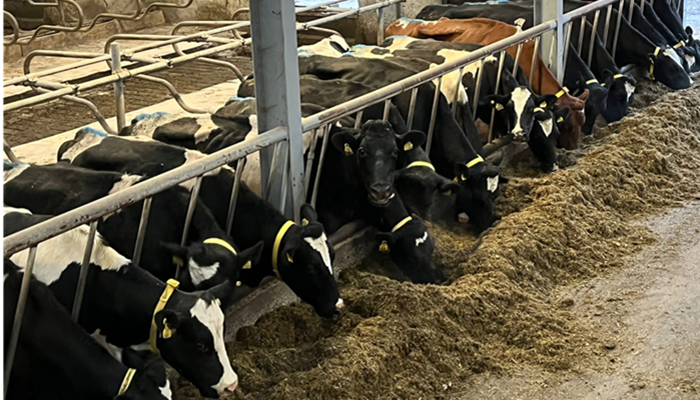
Key Nutritional Requirements and Cost Considerations
Concentrate feed is typically the largest variable expense on winter milk farms, averaging about 10.5 to 11 cents per litre, though costs can vary widely from 6.5 to over 15 cents per litre. Dunne stresses the importance of maintaining a clear focus on the economics of feeding the main herd.
Dry matter intake (DMI) targets range between 20 and 22.5 kg per day to satisfy nutrient requirements. Quality forage with a digestible matter of 75 DMD should comprise at least 60% of DMI, equating to roughly 13 to 14 kg daily, with the remainder made up by concentrates.
Energy is the primary limiting nutrient for milk production, with the diet’s energy density (UFL per kg) balanced against fibre needs to support rumen health. Matching the ratio of protein digestible in the intestine (PDI) to energy is vital for optimising milk yield and feed efficiency. For example, a diet providing 0.94 UFL per kg should deliver 94–97 g of PDI.
Fibre content should target 30-36% total diet NDF, with 24-28% sourced from forage to prevent acidosis. However, excessive fibre from low-quality sources like straw (above 40% NDF) can reduce intake and milk production. When forage quality or intake is limited, digestible fibre supplements are recommended.
Practical Feeding Guidelines Based on Herd Data
Farmers are encouraged to analyse their winter milk recording data to understand their herd’s milk yield distribution before setting feeding strategies. For instance, in a high-yielding herd producing 8,000 kg per cow annually with 40% autumn-calving, average daily yield was about 27 kg, with only 9% of cows exceeding 35 kg.
Notably, the highest-yielding cows, producing more than 35 kg, contribute just 14% of total daily milk output, and the marginal milk from these top performers accounts for only 1.2% of the total. This indicates that 86% of milk output derives from the standard base cow.
Thus, Dunne advises that diet formulation should primarily target the average performance of the whole herd rather than the few high-yielding individuals. Those higher producers can be managed separately as sub-groups.
To maintain cost efficiency, concentrate feed allocation should be limited to 0.24–0.28 kg per kg of milk produced during winter.
Farmers should always base diet formulations on reliable forage analysis, preferably conducted by FAA-approved laboratories, to ensure accurate nutrient balancing and support sustainable milk production while reducing methane emissions.