How technology will shape Irish farming futures
Dr Siobhán Jordan outlined how AI, robotics and connected data systems could redefine Irish agriculture by 2050. She emphasised that success depends on creating sustainable, viable farms that attract new generations and respect farmer autonomy amid evolving challenges.
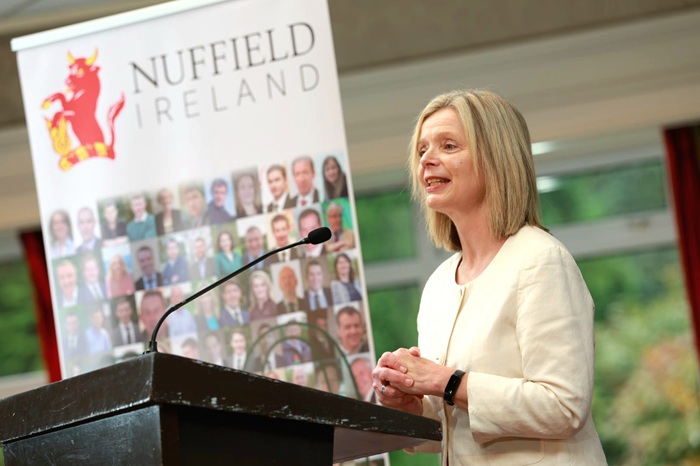
A vision for farming in 2050
Looking towards 2050, Dr Jordan posed critical questions: Will farms be better workplaces? More profitable businesses? Healthier for the environment? And will they be places the next generation genuinely wishes to be part of? She stressed that technology must address real challenges faced by farmers today—such as market volatility, environmental pressures, labour shortages, and the imperative to feed an estimated global population of 10 billion.
“Technological revolutions don’t simply erase old problems; they alter the tools we use to tackle them, sometimes introducing new complexities,” she explained.
The role of AI, robotics, and data connectivity
Artificial intelligence has the potential to transform decision-making on farms by detecting subtle changes in animal behaviour, optimising timing using weather and soil data, and modelling economic and environmental impacts of various management options. Dr Jordan highlighted innovations like smart-glasses delivering livestock data at the point of care and AI-powered cameras identifying early signs of cattle lameness. Yet she cautioned that such technologies require independent validation under Irish conditions.
“There is a vital difference between a recommendation and an actual decision. While AI can suggest actions, responsibility for outcomes remains with the farmer,” she noted. “We should embrace AI’s promise, but it must earn our trust.”
Robotics already assist in automated milking, precision farming, and crop monitoring. Dr Jordan emphasised that the value of robots lies in solving the right problems—relieving repetitive tasks and enhancing safety—rather than shifting costs or dependencies onto farmers.
Connected data platforms like AgNav, a collaborative initiative between Teagasc, Bord Bia, and ICBF, exemplify how integrating farm information with scientific models can support sustainability assessments and actionable planning. This partnership approach ensures data is linked to practical decisions and continuous improvement rather than just generating statistics.
Safeguarding and sustaining farm futures
In light of recent security incidents affecting European retailers, Dr Jordan underscored the necessity of robust cybersecurity measures and contingency plans to protect farming data. She stressed that the goal is not to connect everything indiscriminately but to connect what is useful while upholding farmer choice and control.
Resilience, she argued, should be measured as an outcome of these efforts rather than a mere label. The farm of 2050 need not be the most technologically advanced but must be best equipped to thrive economically, environmentally, and socially.
Providing a fulfilling career with viable incomes, manageable workloads, and opportunities for leadership is essential to attract young people. Digital technologies offer promise, but youth must also see thriving businesses and vibrant rural communities.
Long-term investment in key research areas—soil science, animal breeding, climate resilience, and digital infrastructure—is crucial. Dr Jordan reminded her audience that the benefits of such investment often emerge slowly but are vital to future-proofing the sector.
Finally, she highlighted the importance of leadership and collaboration among farmers, researchers, industry, and policymakers. “Technology connects systems; leadership connects people, knowledge, and opportunities,” she said.
Dr Jordan concluded with a hopeful vision: “The future of farming is not about replacing farmers with technology. It’s about equipping them with better tools, better information, and a better future.”
For further details on Nuffield Ireland, visit their official website.