Managing late grazing and drying off on demo farms
Teagasc advisor Sean Callan recently visited farmer Cian Jobe in Longford to discuss strategies for extending the grazing season and managing drying off. The update highlights milk and grassland performance on Teagasc/Lakeland monitor farms as they prepare for the upcoming calving season.
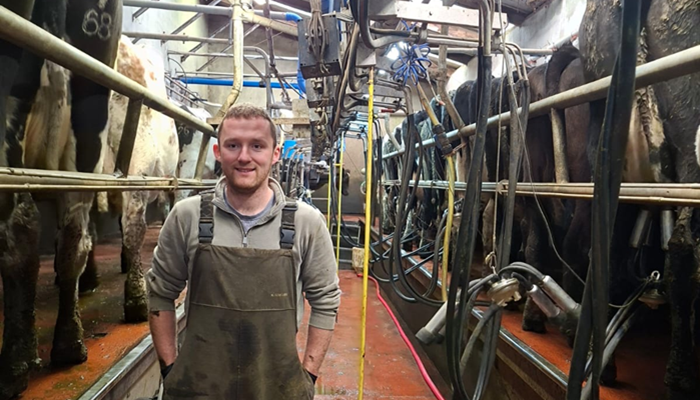
Focus on drying off and cow condition
Cian places significant emphasis on the dry cow period, recognising its critical role in next year’s calving and milk production. Through regular body condition scoring (BCS), cows with lower condition scores have been shifted to once-a-day milking to improve their state.
The first group of cows, including those under-conditioned (BCS below 2.75) and first-calvers, are slated for drying off in two weeks. An extended dry period of 90 days or more is expected to help these animals calve in optimal condition, aiming for a BCS of 3.25.
Cian adopts Selective Dry Cow Therapy (SDCT) to limit antibiotic use, with his final milk recording scheduled within 30 days of drying off. Approximately 30% of cows will receive antibiotic treatment, while the remainder will be treated with teat sealants only. This decision is informed by individual cow somatic cell count (SCC) data from current and previous milk recordings and clinical mastitis records. The herd’s average SCC between January and September 2026 was 103,000 cells/ml.
Farmers seeking advice on SDCT are encouraged to contact their milk quality advisor, veterinarian, or Teagasc advisor.
Milk and grassland performance updates
Milk output has remained robust over the past month. Despite a volume drop from 18.8 to 16.2 litres per cow (a 13.8% decrease), average fat percentage rose from 5.39% to 5.62%, and protein increased from 4.21% to 4.38%. This resulted in a 10% reduction in milk solids production, from 1.85 to 1.66 kg per cow. Notably, the group’s average SCC fell from 145,000 to 127,000.
Grass growth rates have declined by over 50%, from 60 to 26 kg DM/ha/day, with farm covers decreasing from 992 to 752 kg DM/ha and cover per livestock unit from 323 to 272 kg DM/LU. Pre-grazing yields vary widely across farms, ranging between 1,000 and 2,200 kg DM/ha. Demonstration farmers have reduced grass demand to an average of 38 kg DM/ha/day by lowering stocking rates to 2.88 cows per hectare and incorporating 3 to 8 kg of high-quality silage per cow into the diet.
All six participating farmers continue to regularly walk their farms to monitor AFC closely. With plans to graze well into November, they carefully manage grass utilisation to ensure sufficient supplies align with their 2027 calving schedule. The grass budget tool is used to determine the optimal timing to cease grazing, aiming for a closing farm cover of 750 kg DM/ha by 1 December.
Upcoming dairy conference
The Teagasc National Dairy Conference will take place on Wednesday, 25 November 2026, at the Radisson Blu Hotel in Little Island, County Cork. The event’s theme is “Developing Resilient Dairy Farming Systems” and will showcase the latest research and innovations within Ireland’s dairy sector.
For further details on sessions and workshops, interested parties should consult the official conference website.