How forestry boosts farm income and cuts emissions
The Jones family in Co. Cork have integrated forestry into their farm to enhance income and reduce carbon emissions. Their 22 hectares of mixed woodland not only sequester significant CO2 but also represent a valuable long-term investment alongside dairy farming.
Source:
Teagasc Agricultural News
•
⏱️ 2 min read
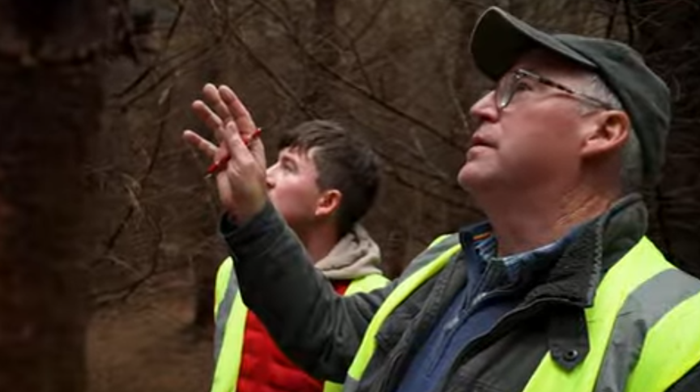
Forestry has become an integral part of the Jones family farm in Bawnmore, Kanturk, Co. Cork, complementing their dairy enterprise and offering a sustainable income source. Stephen Jones and his father Colman farm 108 hectares, milking 100 dairy cows on 40 hectares, while also managing 22 hectares of forestry, primarily Sitka spruce with some broadleaf species.
Since planting the forest in 2005 on a mix of good and marginal land, the family have seen multiple benefits including carbon sequestration, biodiversity enhancement, and shelter for livestock. The ash component was removed and replanted due to ash dieback under the Reconstitution Ash Dieback Scheme in 2025/2026. Using the Teagasc Forest Carbon Tool, the Joneses estimated that their forest sequestered around 30 tonnes of CO2 equivalent per hectare in 2025, averaging 16 tonnes annually over the crop’s lifetime.
Alongside forestry, the farm’s emissions were assessed at 550 tonnes CO2e in 2025, equating to 8 tonnes per hectare, with a focus on sustainable fertiliser and slurry application practices. While the current system does not yet credit farmers for carbon sequestration, Ireland’s forthcoming Carbon Farming Framework aims to enable income generation from certified carbon removals by 2028. The forestry asset is valued at approximately €30,000 per hectare, promising significant revenue from thinning and final harvest, securing a financial legacy for future generations.
0 views