Farmers adapt to rising costs and climate shifts
Tom Barry reflects on an exceptionally early and challenging harvest in Co. Cork, highlighting adaptations to extreme weather and rising input expenses. His innovative use of cover crops and sustainable practices aims to safeguard farm viability amid evolving climate and economic pressures.
Source:
Teagasc Agricultural News
•
⏱️ 2 min read
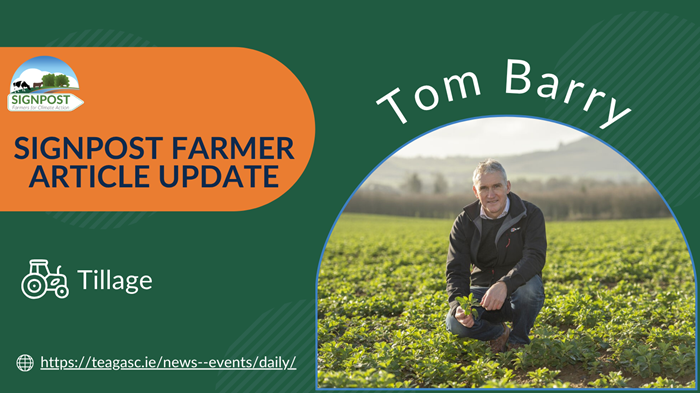
Tom Barry, a tillage farmer in Co. Cork and participant in the Teagasc Signpost Programme, recently shared insights on his 2026 harvest and strategies to tackle increasing costs and shifting climate patterns.
The 2026 harvest was notably early, beginning on 3rd July and concluding by 31st July, a significant change from previous decades when August was the main harvest month. While early-sown winter and spring crops produced strong yields, the later spring bean crop suffered due to severe drought, yielding only 1.5 tonnes per acre. Barry attributes these changes to evolving weather patterns over his 30 years in farming, necessitating adjusted crop rotations, sowing dates, and variety selections to mitigate extreme climate events.
To counter drought risks, Barry has shifted winter crop sowing earlier by two to three weeks, moving from early/mid-October to late September. This year, he began sowing KWS Tayo hybrid winter rye on 21st September, followed by winter barley on 23rd September, with plans to sow winter wheat in early October. Cover crops also play a vital role; Barry planted over 150 acres of kale and leafy turnip under agri-environmental schemes, using precision methods to achieve strong establishment. These cover crops help absorb excess soil nutrients and provide fodder if spring conditions prove difficult.
Barry remains vigilant about soaring input costs, especially diesel, which has increased his sowing expenses by nearly €11 per acre since 2021, amounting to an extra €5,800 for the 2026/27 season just for planting. He welcomes government support such as the Fuel Income Support Scheme 2026 but acknowledges continued vulnerability to fuel price fluctuations. To offset costs and enhance sustainability, he installed a photovoltaic system last year, saving approximately €3,500 annually. Barry emphasises the importance of sustainable farming practices—including organic manures, crop rotations, soil health improvements, reduced artificial fertiliser use, cover cropping, straw incorporation, and energy-efficient technologies—to build resilience against external geopolitical and environmental challenges.
Tom Barry collaborates closely with his Teagasc Signpost Programme tillage advisor, John Mahon, to implement these adaptive strategies. More information on the Teagasc Signpost Programme is available through their official channels.
0 views