Cost and benefits of cutting ammonia emissions on farms
Researchers from Teagasc and UCD have evaluated the financial and environmental impacts of various farming practices aimed at reducing ammonia emissions. Their study highlights effective strategies vital for Ireland to meet its 2030 EU emissions target while supporting sustainable agriculture.
Source:
Teagasc Agricultural News
•
⏱️ 1 min read
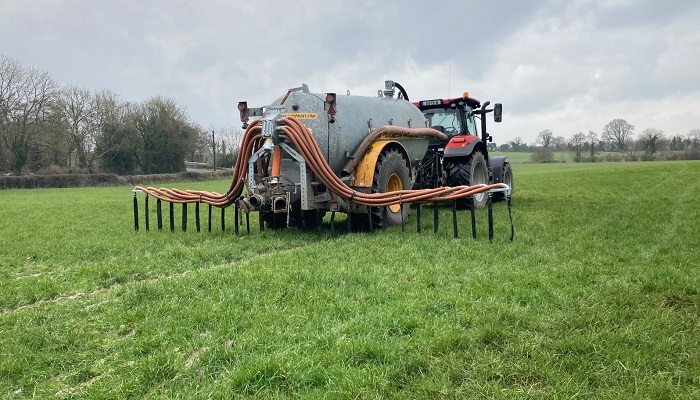
A recent collaborative study by Teagasc and University College Dublin has investigated the cost-effectiveness of on-farm interventions to lower ammonia emissions, a significant contributor to air pollution and greenhouse gases in Ireland. Agriculture accounts for 99% of the country’s ammonia emissions, with livestock manure as the primary source, followed by synthetic fertilisers.
The research employed a Marginal Abatement Cost Curve (MACC) approach, analysing thirteen mitigation practices across bovine, pig, and poultry farms under varying economic and technology adoption scenarios. Findings revealed that low-emission slurry spreading (LESS) on cattle farms offers the most substantial reduction in ammonia, while methods such as using protected urea, clover establishment, liming, and lowering crude protein in diets are cost-effective across all scenarios.
Although some measures, like bovine slurry amendments, carry higher costs, medium to high adoption rates of these practices are essential for Ireland to achieve its 5% ammonia reduction target by 2030. The study recommends enhancing policy incentives and financial support to encourage uptake, complementing existing regulations that mandate LESS and restrict unprotected urea. This research forms part of the Abating Ammonia in Agriculture project, funded by the Department of Agriculture, Food and the Marine.
0 views