Uplands farmers face uncertain CAP budget under new reforms
Teagasc's Dr. Kevin Hanrahan warned that Ireland's proposed CAP income support allocation marks a substantial cut. Speaking at the Uplands Symposium in Killarney, he said the final farm payment framework for 2028 to 2034 remains unsettled, with the 2027 EU budget set to roll over.
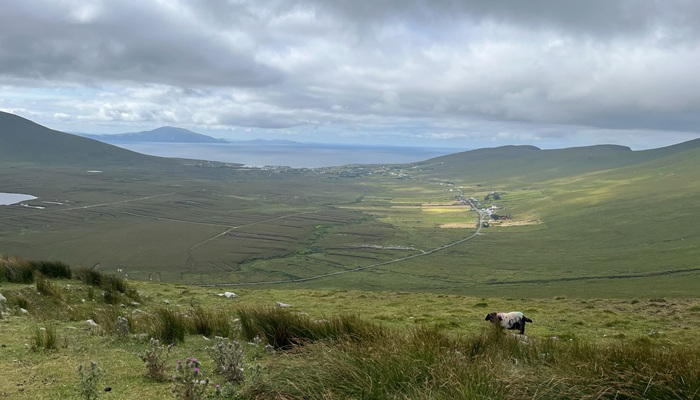
Negotiations over the future Common Agricultural Policy (CAP) remain ongoing, with a final agreement not expected until 2027. Still, the potential impact of a reduced overall budget dominated discussions at today's Uplands Symposium in the Great Southern Hotel, Killarney, Co. Kerry, jointly hosted by Teagasc and CAFRE.
Head of Rural Economy and Development Programme at Teagasc, Dr. Kevin Hanrahan, said Ireland's pro-rata €8.161 billion ring-fenced allocation represents the minimum level of income support available to Irish farmers under the new CAP. He described this as a "headline" reduction of 23.4% compared with the 2021-2027 budget.
Hanrahan said the ring-fenced budget covers Pillar I payments, including Degressive Area-Based Income Support, coupled payments and the Small Farmer Scheme, as well as co-financed Pillar II payments such as ANC and agri-environmental and climate actions (AECAs). Additional national co-financing for schemes such as ACRES, ANC and similar Pillar II measures would increase the total CAP resources supporting farm incomes in Ireland.
The agreements reached by Ministers for Agriculture in October are expected to give Member States more flexibility in designing their CAP plans for 2028-2034, which may benefit upland farmers. However, the size of the Irish CAP budget will depend on the willingness of the Irish government to co-finance measures, and it remains unclear whether national exchequer funds will be sufficient.
Hanrahan noted that the new CAP will allow Member States to target support at different farmer types. Higher DABIS payments are mandatory for young farmers, while other groups could be supported through coupled payments for sheep or payments on the first hectares for smaller farmers. ANC payments are no longer mandatory but remain an option.
"Farmers in Ireland's uplands produce food and other public goods valued by Irish and European society. It is increasingly important to make that case," he said. He added that upland farmers typically earn relatively low incomes and depend heavily on CAP support, so maintaining that support will depend on demonstrating their output and ecosystem services.
For farmers concerned about payments next year, Hanrahan said that in the absence of an agreement on the 2028-2034 budget, the EU budget for 2027 will be rolled over until a new budget is agreed.