November flock checks can safeguard spring lambing
Teagasc adviser Andy Ryder has outlined practical steps to protect breeding performance and prepare for the season ahead. His guidance covers ram health, ewe nutrition, replacement stock and grass supplies on Irish sheep farms.
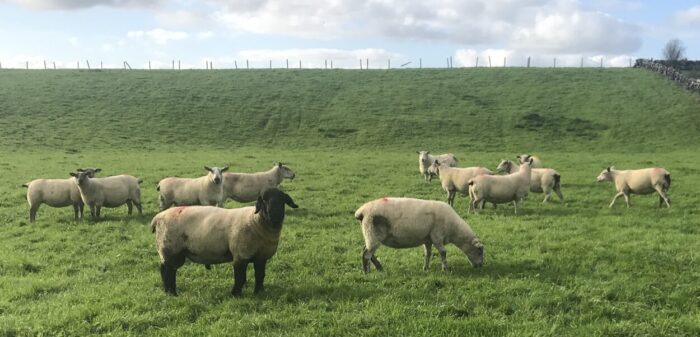
Teagasc drystock adviser Andy Ryder is urging sheep farmers to monitor rams closely during mating and plan grass supplies ahead of next year’s lambing.
Lameness, infertility or poor health in a ram can delay lambing or leave ewes empty. Changing raddle colours every 17–18 days helps identify potential fertility problems and predict lambing dates. Ryder recommends one mature ram per 40–50 ewes, or one ram lamb per 25 ewes. After mating, rams should be sheltered and fed to rebuild condition.
Handling tasks, including dosing, dipping, vaccination and foot bathing, should ideally be completed before mating. Ewes should reach a body condition score of 3 beforehand and have sufficient grass during mating and early pregnancy. Fluke treatment needs depend on farm location and history; mild, wet autumn weather favours the parasite.
Replacement ewe lambs should gain 40–50g daily over winter, with attention to dosing and lameness. A Teagasc Athenry study found better winter nutrition increased lamb weaning weight by 0.6kg at each lambing up to five years of age and reduced ewe barrenness from 6.1% to 3.6%.
Ryder advises resting 40% of the farm by mid-November, ideally in fields near the yard. Soil sampling can inform next year’s fertiliser plan, while lime can be applied where needed if ground conditions allow.