Irish ash trees show resilience against drought and dieback
Irish ash trees are proving more resilient than expected when facing the twin threats of drought and disease, according to new Teagasc-led research. Scientists tracked 30 trees at Oak Park during the record-breaking summer of 2026, uncovering crucial clues about how the species might survive a changing climate.
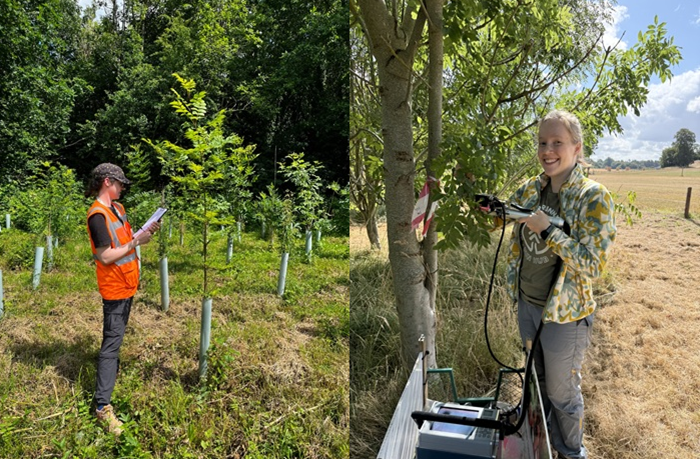
Ireland's native ash trees are facing a double threat, and new research suggests many are holding on better than expected. The summer of 2026 was the hottest on record in Ireland since records began 127 years ago, with temperatures reaching over 25°C, and western Europe as a whole experienced its warmest summer on record, surpassing 2003.
Ash dieback, caused by the invasive fungus Hymenoscyphus fraxineus, has already devastated native common ash populations across Europe and can kill up to 80% of ash trees where it is present. Researchers from the E-PATH project, Teagasc and Trinity College Dublin used the drought to examine how infected trees cope with stress.
Teagasc PhD researcher Bailey Parkhouse and Senior Research Officer Dr. Dheeraj Singh Rathore, working with Dr. Carmen Watkins and Dr. Silvia Caldararu from Trinity College, monitored the health of 30 Irish ash trees at the Teagasc Oak Park ash gene bank. They recorded photosynthesis, which indicates sugar production and water use, for two weeks during the drought and one week afterwards. It is the first data of its kind collected on Irish ash trees.
The findings offer both encouragement and concern:
- Many infected Irish ash populations remained resilient despite active disease.
- The healthiest infected trees recovered their sugar production after the drought.
- Around 40% of the most diseased trees were badly affected by the dry conditions.
- Recovery ability appears to depend on specific genotypes, meaning some trees are more vulnerable to severe drought.