Ministers launch new European grass-fed dairy beef innovation project
Irish Ministers Heydon and Grealish unveiled the Teagasc-led Better-Calf initiative at a Grange event to advance sustainable farming. This cross-border collaboration aims to optimise grass-based systems across north-west Europe while supporting family farm viability.
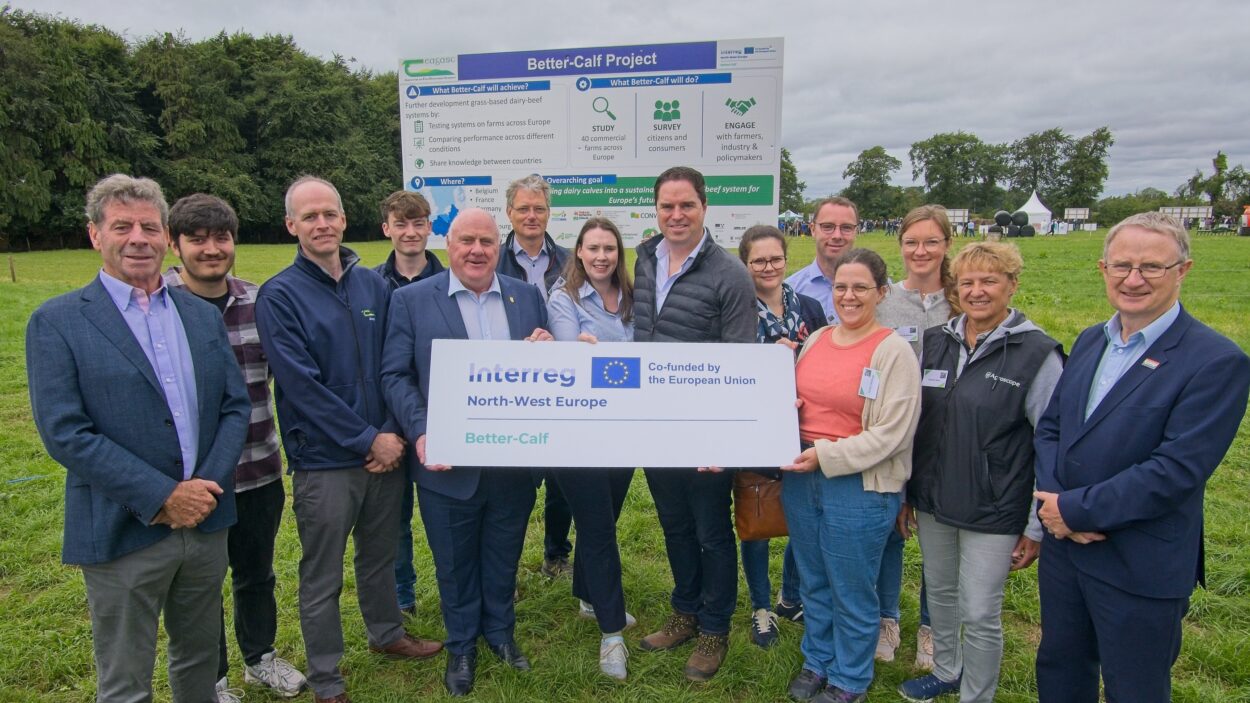
Ministers Launch Major European Dairy-Beef Innovation Project
Ireland stands as a global leader in developing efficient grass-based dairy-beef systems, with over sixty percent of nationally finished cattle utilising this method. Teagasc has crafted detailed blueprints to ensure these animals are raised efficiently and profitably.
At the recent Beef Open Day held at Teagasc Grange, Ministers Martin Heydon and Noel Grealish joined the Better-Calf project team. The gathering featured key figures including Teagasc Chairperson Liam Herlihy, Project Leader Dr Maeve Williams, and Teagasc Director Professor Frank O'Mara.
Growing interest across many EU nations has emerged to adopt grass-based dairy-beef systems. This shift is driven by ethical concerns regarding intensive indoor finishing methods and the desire to better utilise extensive grasslands.
Teagasc leads the Better-Calf project, funded by Interreg North-West Europe. The initiative provides family farms with tools to optimise grass-fed production. Research farm studies will take place in Ireland, France, and Belgium, focusing on maximising pasture access and promoting high animal welfare standards. Furthermore, a network of forty commercial farms spanning Belgium, France, Germany, Ireland, Luxembourg, and Switzerland will be established.
A comprehensive survey of north-west European consumers will gauge expectations for dairy-beef products and assess their willingness to pay premiums for such goods.
Minister for Agriculture, Food and the Marine, Martin Heydon TD, stated that the project aligns with the sector's strategy outlined in Food Vision 2030. He emphasised the goal of greater integration between dairy and beef sectors. Heydon noted that the success of the previous Dairy Calf to Beef Action Plan demonstrates the strength of collaborative efforts involving his Department, Teagasc, Bord Bia, ICBF, and AHI. He highlighted that leading this key European project recognises Ireland's expertise in grass-fed systems.
Heydon further remarked that the initiative aligns with core principles of the new EU Livestock Strategy, which will be discussed during the Irish Presidency. By championing grass-based production, Ireland and its partners demonstrate how livestock farming can meet high climate and welfare ambitions while safeguarding the economic future of family farms.
Noel Grealish TD, Minister of State with responsibility for Food Promotion and Research and Development, expressed delight at Teagasc's leadership. He identified environmental resilience and economic viability as crucial for the sector's future success. Grealish noted that optimising grass-based systems helps family farms meet shifting consumer expectations while reducing enterprise overheads.
Dr Paul Crosson, lead applicant on the Better-Calf project and Beef Enterprise leader at Teagasc Grange, highlighted the uniqueness of Ireland's approach. He observed that viewing grass-based beef production as the norm is unusual globally, where long indoor feeding periods are standard. The project aims to refine these systems and build robust farmer networks for rapid implementation across Ireland and north-west Europe.
Dr Maeve Williams, Better-Calf Project leader, emphasised the strategy of combining detailed research with on-the-ground commercial experience to develop practical blueprints for grass-based dairy-beef systems.
Pauline Madrange, communication manager from the French Livestock Institute, noted that European family farms face increasing financial pressure. She cited statistics showing fifty-one percent of retiring farmers in France have no successor. Madrange viewed the project as an opportunity to improve profitability by increasing pasture use, thereby enhancing the viability of family farms.