Dairy farmers urged to build resilience
Teagasc’s national gathering in Cork put pressure on farm businesses at the centre of the discussion after a difficult year for milk producers. Speakers pointed to weather, costs, water protection, pasture use and market demand as crucial tests for the sector.
Source:
Teagasc Agricultural News
•
⏱️ 2 min read
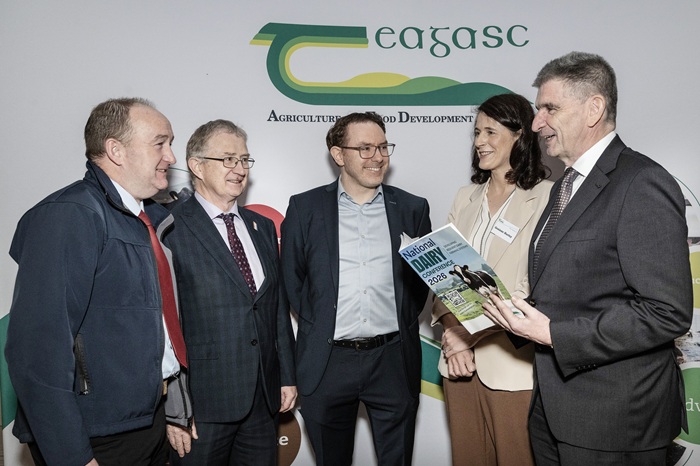
400 attendees heard that Irish dairy farms must be better prepared for shocks after a year marked by cost pressure, lower milk prices and mid-season drought in many areas.
The Teagasc National Dairy Conference took place in Little Island, Co Cork, on Wednesday 25 November, under the theme “Developing Resilient Dairy Farming Systems”.
Teagasc director Professor Frank O’Mara told farmers resilience meant planning for disruption from several directions. “You must be able to deal with shocks from multiples places; weather shocks, new diseases, trade disruption from tariffs and others,” he said. “You must try to have your farm business as well prepared as you can be to deal with these turbulent events.”
Teagasc chair Liam Herlihy urged dairy farmers to examine their farmyards and seek a “second set of eyes” to identify practical steps that could reduce nutrient losses to waterways.
Professor Laurence Shalloo said the gap between the highest and lowest cost milk producers, measured through the Teagasc National Farm Survey, has widened. He identified pasture utilisation as the key driver of Irish dairy cost competitiveness.
John Lancaster of Stone X said milk output from major exporting regions has grown for an extended period, while global import markets have continued to absorb extra supply. Dairygold chief executive Michael Harte said: “a resilient processor needs resilient farmers. Resilient farmers need a strong processor.”
0 views